February 25, 2012

Project 52, Week 9 - Light/Dark Balance

"Balance in photographic composition is a matter of making pictures look harmonious. Each element in a picture has a certain amount of value in respect to all the other elements. Every tone, mass, shape, tree, rock figure, building, line, or shadow contributes a certain amount of weight that must be arranged correctly in the composition to give the impression of balance." (NAVY photography manual)

This month we have discussed several elements and techniques to help us achieve compositional balance and we left out a few. 


This week we look at balancing light and dark elements in our photographs. 
  • Dark elements have more visual weight than light colored elements so a larger light area will be needed to balance a dark area
  • The eye is drawn to the brightest part of a scene. 
  • You can add visual weight to a light colored object by placing it in front of a dark area (and vice versa) 
  • Although light and dark balance can sometimes be observed (appreciated) better in black and white photography, it is not limited to black and white photos. 
  • The effective balance of light and dark elements can add emotions: drama, mystery, fright, happiness, hope
This topic will be explored in different ways several times in the coming year, but this week look at the suggested photographs to get a feel for this compositional tool and to develop your photographer's eye.

Suggested Reading and Photograph examples:
  1. Imogen Cunningham (Warning: she specialized in botanical subjects, industrial landscapes, and nudes)  I also suggest you search Google images for imogen cunningham photography.
  2. Balance and Flow in Landscape Photography from Mountain High Workshops; a pdf article illustrating the topic
  3. Composition: Balance from Media College.com; two photographs illustrating light/dark balance
  4. Basic Composition Techniques: Balance from Expert Photography; an article with photos
  5. Balance from North Penn School District
  6. Photography Rules of Composition: Visual Weight from Ultimate Photo Tips
  7. Fundamental of Photography, Composition & Light by Matt Eddy from Oil-Rig Productions; a pdf file - see pages 6 and 7 -  In the Balance photo on page 6, notice how the shadows balance the lighter background.  In the next slide notice how the dark sky balances the light colored water.
Refer to the 2012-Project-12-52-365 for the year's list of topics.

February 18, 2012

Project 52, Week 8, Radial Symmetry

This week we're discussing Radial Symmetry which is symmetrical arrangement around a center point, or symmetry in a circle.  Think sunflower, snowflake, or sand dollar.  (If you are following the 2012-Project-12-52-365 page, you may notice that I switched the topics for weeks 8 and 9.) 

Types of radiation patterns (2 D Design page 24):
  • Centrifugal (like a sunflower or snowflake)
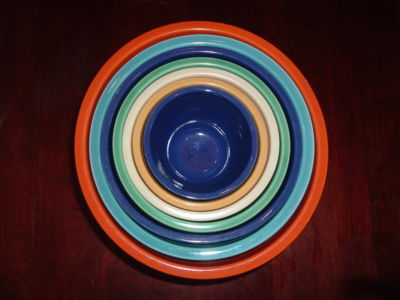
  • Concentric (like a dartboard or other target)
  • Spiraling (like a fully blooming rose)
  • Centripetal (like a half-opened rose, a spiral staircase viewed from the top down) (Frankly, I have difficulty discerning centrifugal from centripetal in many photographs labeled "centripetal".  Think of centrifugal as spinning outward and centripetal as spiraling inward.)
Here is one example of radial symmetry.  This picture of a snow crystal (snow flake) was taken by Wilson Bentley, the Snowflake Man. Mr. Bentley was a self-educated farmer and the first person to photograph a single snowflake in 1885. Yep, 1885.


(This photo is in the  public domain because it was never copyrighted or the copyright has expired.  It was acquired from Wikimedia Commons)

 Suggested Reading and Photograph examples:
  1.  2 D Design, Radial Symmetry by Dan Collins, Arizona State College
  2. The "Golden spirals" and "pentagonal" symmetry in alive nature from Golden Museum
Centrifugal
  1. Centered Composition by Maddie, from Maddie's Photography; grapefruit half
  2. Cnidarian Characteristics by Laura Klappenblach from Animalsabout.com
  3. Purple Cone Flower from Echobirder
Centripetal
  1. North Rose Window from Les Guides Nemo
  2. Spiral Stairs/ from Amazing data
  3. Whirlpool by Ryan Groom
Concentric
  1. Concentric by Carol Stark from PictureSocial; rain drops in water
  2. Agate Concentric Pattern from Microscope Talk; Summerville Lace Agate
  3. Mixing Bowl Set from Ask The eBay Queen
Spiraling
  1. Radially by Brian Auer from Fine Art Photography, ornamental cabbage
  2. Succulent by Daniel Furon from Fine Art America
  3. Clear Sundial/ by Jeffrey C De Guzman from Underwater; a seashell

February 11, 2012

Project 52, Week 7, Informal Balance - Asymmetry

This week we're going to become unbalanced and talk about using asymmetry, or informal balance, when composing our photographs.  Informal balance is considered more interesting more dynamic, and less static than formal balance, 

"Asymmetrical balance is introduced when the presumed weight of two or more lighter objects is equalized by a single heavier object placed on the other side of the imaginary pivot point. Asymmetrical balance is more difficult to achieve than symmetrical balance, because of the problem of establishing relative weight values for dissimilar elements within the picture area as well as presenting some form of stability."  NAVEDTRA 14209 (section 5-8, page 116)

Informal balance can be harder to achieve than symmetry because it isn't just balancing two objects or elements. It's arranging everything in the scene to create an attractive balance that leads the eye to the photo's focal point.   Some things to note:
  • Use the Rule of Thirds  (and other golden rules) to help achieve successful asymmetry.
  • Dark objects weigh more than light colored ones.
  • Elements at the top of the scene have more weight than those of the same size in the lower section.
  • An object near the edge of the scene has more weight than one that is centered.
  • A group of small items can balance one larger related object.
  • A small visually interesting object can balance a larger but less interesting subject.  "Visually interesting" may relate to the shape, color, texture, and placement as well as the object itself.
Can't decide whether the scene demands Symmetry or Asymmetry?  Shoot both and decide later.

Suggested Readings and Photographs:
  1. Symmetry and Asymmetry from JohnsbarsbyPhotography; brief article with photographs
  2. Asymmetry from 2 D Design Notes; illustrated short lecture type article
  3. Basic Photography Techniques, Asymmetrical, or Informal, Balance from photoinf.com; excerpt from the NAVY manual on photography
  4. Symmetry and balance in photographic composition from DigitalPhotographyTipsOnline.com; lists 7 tips
  5. Composition in Landscape from Learning Photography; examples of symmetry/asymmetry composition and landscape photos
  6. Symmetry and Asymmetry in Aesthetics and the Arts by I C McManus, Department of Psychology, University College London; a cerebral look at symmetry and asymmetry
  7. Asymmetrical Balance: Creating Dynamic Compositions from The Helpful Art Teacher; lots of illustrations
Refer to the 2012-Project-12-52-365 page for the year's list of topics.